
- Buy Crypto
- Markets
 Futures
- Spot
- Copy Trade
- Earn
- More
Exciting Backpack Staking Initiative Launched for SOL Reserves
By: bitcoin ethereum news|2025/05/08 19:30:05
0
Share
The world of decentralized finance and centralized crypto platforms continues to evolve rapidly. A significant development recently announced by Backpack, a prominent Solana-based crypto exchange, signals a major step in how exchanges manage their reserves and potentially benefit their users. This announcement centers around Backpack Staking , specifically leveraging their Solana (SOL) holdings. What is Backpack Staking and Why Stake SOL Reserves? Armani Ferrante, the founder and CEO of Backpack, shared the news via social media: Backpack has officially begun the process of staking its internal Solana (SOL) reserves. Staking involves locking up cryptocurrency assets to support the operations of a blockchain network, typically in proof-of-stake systems like Solana. In return for securing the network and validating transactions, stakers receive rewards, often in the form of newly minted tokens or transaction fees. For a Crypto Exchange holding significant reserves, staking presents an opportunity for Yield Generation on otherwise idle assets. Here’s a breakdown of the initial plan: Phase 1 (Current): Backpack is initiating the staking process with its own SOL reserves. Yield Distribution (Initial): All staking yields generated from these reserves will initially be directed towards lenders on the platform. This suggests an integration with Backpack’s lending services, potentially enhancing the returns available to users who lend assets. Future Expansion: The ultimate goal is to expand the distribution of staking yields to include all staking users, encompassing both lenders and depositors on the Backpack platform. This move is strategic. By staking reserves, Backpack not only contributes to the security and decentralization of the Solana Staking network but also creates a new revenue stream that can be passed on to users, potentially making the platform more attractive compared to competitors that do not offer yield on deposited assets. Implications for TVL Reporting and Platform Growth Armani Ferrante also highlighted a potential side effect of this initiative: inaccurate reporting of Total Value Locked (TVL) by external monitoring platforms. He explained, “For now, I expect most platforms monitoring our wallets to inaccurately report our TVL numbers, as they’re not tracking the staked quantity.” This is a common challenge in DeFi and CEX-DeFi integrations. When assets are moved from known exchange hot/cold wallets into staking contracts or protocols, standard blockchain explorers and TVL aggregators may not recognize them as belonging to the exchange’s accessible reserves unless they specifically track those staking addresses and attribute them correctly. This could lead to a temporary dip or misrepresentation of Backpack’s reported TVL, even though the underlying assets are still managed by the exchange, albeit in a yield-generating state via SOL Staking . Looking ahead, Backpack is also preparing for growth. Ferrante mentioned plans to create more wallets to accommodate future inflows. This indicates anticipation of increased user adoption and asset deposits, which could be fueled, in part, by the attractive prospect of earning yield through this new staking program. Benefits and Potential Challenges of Staking Exchange Reserves Staking exchange reserves offers several compelling benefits: Enhanced User Value: Passing on staking yields to users (initially lenders, then depositors) directly adds value and incentivizes holding assets on the platform. This is a key aspect of Yield Generation . Ecosystem Contribution: By staking SOL, Backpack strengthens the Solana network’s security and contributes to its decentralization, benefiting the broader ecosystem it operates within. New Revenue Stream: Staking rewards provide a passive income stream for the exchange itself, which can be reinvested or used to improve services. Competitive Advantage: Offering yield on deposited assets can differentiate Backpack from exchanges that do not provide such features. However, there are also potential challenges: Liquidity Management: Staked assets are typically locked for a period, which needs careful management to ensure the exchange can meet user withdrawal requests. Slashing Risk: While less common with major protocols like Solana, improper validator behavior can lead to a portion of staked assets being “slashed” or penalized. Operational Complexity: Managing staking operations at scale, including choosing validators, monitoring performance, and distributing rewards, adds complexity to exchange operations. TVL Reporting Accuracy: As noted by Ferrante, external reporting can be inaccurate, potentially affecting public perception or ranking based on TVL metrics. How Does This Impact Users? For users of the Backpack platform, this initiative could be very positive. If you are a lender on Backpack, you may soon see enhanced returns as staking yields are directed your way. If you are a depositor, the future plan suggests you could eventually earn yield on your deposited SOL simply by holding it on the exchange, without needing to manage the staking process yourself. This passive income opportunity aligns with the growing user demand for Yield Generation in the crypto space. It’s important for users to stay informed about the specific terms and conditions as Backpack rolls out the program, especially regarding how yields are calculated and distributed, and when the program expands beyond lenders to include all depositors. The Bigger Picture: Staking as a Standard for Crypto Exchanges? Backpack’s move raises questions about whether staking internal reserves and sharing the yield will become a standard practice for Crypto Exchange platforms, particularly those built on or supporting proof-of-stake networks. As the crypto market matures, exchanges are looking for innovative ways to attract and retain users, and offering passive income opportunities like staking rewards directly on deposited assets is a powerful incentive. This trend could lead to increased demand for Solana Staking services overall, as exchanges become major stakers. It also highlights the ongoing convergence of traditional exchange services with DeFi-like yield-generating mechanisms. Conclusion: A Strategic Move for Backpack and Solana Backpack’s decision to begin staking its SOL reserves and distribute the yields marks a significant strategic move. It positions the exchange to offer enhanced value to its users through passive income opportunities, strengthens its ties to the Solana ecosystem by contributing to network security, and opens up a new internal revenue stream. While challenges like accurate TVL reporting exist, the potential benefits in terms of user acquisition and retention, as well as contribution to the underlying network, appear substantial. This initiative is a compelling example of how crypto platforms are evolving to integrate yield generation directly into their core services, potentially setting a precedent for other exchanges in the future. To learn more about the latest crypto market trends, explore our article on key developments shaping Solana price action and institutional adoption. Disclaimer: The information provided is not trading advice, Bitcoinworld.co.in holds no liability for any investments made based on the information provided on this page. We strongly recommend independent research and/or consultation with a qualified professional before making any investment decisions. Source: https://bitcoinworld.co.in/backpack-staking-sol-reserves/
You may also like

Particle Founder: The entrepreneurial insights I have gained the most from in the past year
Stop lean startup, stop lightning entrepreneurship, and think carefully about what your product aspirations are.

Huang Renxun's latest podcast transcript: The future of Nvidia, the development of embodied intelligence and agents, the explosion of inference demand, and the public relations crisis of artificial intelligence
The competition in the future is not just about whose model is larger or whose computing power is stronger, but also about who understands the industry better, who can embed AI more deeply into real processes, and who can organize these capabilities into a runnable and scalable system.

OKX Ventures Research Report: AI Agent Economic Infrastructure Research Report (Part 1)
The existing infrastructure is hostile to the Agent economy. Agents can think and act independently at the "capability level," but at the "economic level," they are still locked into infrastructure designed for humans.

The migration of settlement rights: B18 and the institutional starting point of on-chain banks
In the traditional system, banks decide the settlement; in the on-chain system, code begins to take over this responsibility.

From Tencent and Circle: Looking at the Simple and Difficult Questions of Investment
The AI narrative continues to ferment, but the recent performance of related stocks varies, with some in the midst of summer and others as if in winter.

The second half of stablecoins no longer belongs to the crypto circle
What Coinbase doesn't want, Mastercard is eager to buy.

Cursor "Shell" Kimi Controversy Reversed: From Copyright Infringement Allegations to Authorized Collaboration, China's Open Source Model Once Again Becomes a Global AI Foundation
Cursor was accused of being based on Kimi K2.5, which sparked controversy, and was later confirmed to be compliant through Fireworks AI due diligence.

The Real Reason Tokens Don't Sell: 90% of Crypto Projects Overlook Investor Relations
Provide an Investor Relations Best Practices Guide for Crypto Projects.

Is the income of pump.fun real, earning a million dollars a day despite the market downturn?
If it can really earn this much, what is the reason for the low price of $PUMP?

The real reason why tokens are not selling: 90% of crypto projects neglect investor relations
Investor Relations Practice Guide for Cryptocurrency Projects.

Who is the true winner of the "Tokenization" narrative?
Virtually everyone benefits, but the reason for the benefit, the timing, and the underlying logic are completely different.

Moss: The Era of AI-Traded by Anyone | Project Introduction
AI Trading Agent is rapidly growing its infrastructure.

Chip Smuggling Case Exposes Regulatory Loophole | Rewire News Evening Update
AI chips have become a strategic asset more sensitive than missiles

How a Structured AI Crypto Trading Bot Won at the WEEX Hackathon
Ritmex demonstrates how disciplined risk control and structured signals can make an AI crypto trading bot more stable and reliable on WEEX, highlighting the importance of combining execution discipline with scalable AI trading systems.

Old Indicator Fails, Three Major New Signals Emerge: BTC True Bottom May Still Be Below $60K
When the grocery shopping auntie on the subway, or Tony the hairdresser, start asking you about BTC, crypto, and cryptocurrency investments, selling immediately will be the only best option.

Meeting OpenClaw Founder at a Hackathon: What Else Can Lobsters Do?
Imperial College London MetaGame: AI Agent × Web3 Landing Three Major Directions.
Huang Renxun's Latest Podcast Transcript: NVIDIA's Future, Embodied Intelligence and Agent Development, Soaring Demand for Inferencing, and AI's PR Crisis
The future of competition is not only about whose model is bigger, whose computing power is stronger, but also about who understands the industry better, who can more deeply integrate AI into real processes, and who can organize these capabilities into a set of executable, scalable systems
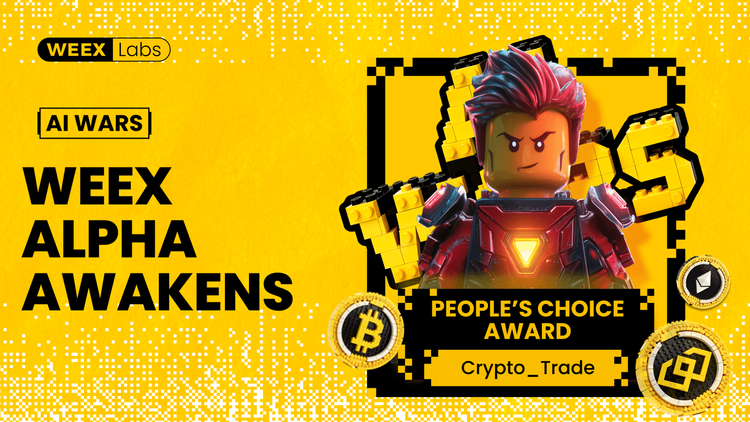
How a Structured AI Crypto Trading Bot Won at the WEEX Hackathon
Crypto_Trade shows how structured inputs and controlled adaptability can build a more stable and reliable AI crypto trading bot within the WEEX AI Trading Hackathon, highlighting a practical path toward scalable AI trading systems.
Particle Founder: The entrepreneurial insights I have gained the most from in the past year
Stop lean startup, stop lightning entrepreneurship, and think carefully about what your product aspirations are.
Huang Renxun's latest podcast transcript: The future of Nvidia, the development of embodied intelligence and agents, the explosion of inference demand, and the public relations crisis of artificial intelligence
The competition in the future is not just about whose model is larger or whose computing power is stronger, but also about who understands the industry better, who can embed AI more deeply into real processes, and who can organize these capabilities into a runnable and scalable system.
OKX Ventures Research Report: AI Agent Economic Infrastructure Research Report (Part 1)
The existing infrastructure is hostile to the Agent economy. Agents can think and act independently at the "capability level," but at the "economic level," they are still locked into infrastructure designed for humans.
The migration of settlement rights: B18 and the institutional starting point of on-chain banks
In the traditional system, banks decide the settlement; in the on-chain system, code begins to take over this responsibility.
From Tencent and Circle: Looking at the Simple and Difficult Questions of Investment
The AI narrative continues to ferment, but the recent performance of related stocks varies, with some in the midst of summer and others as if in winter.
The second half of stablecoins no longer belongs to the crypto circle
What Coinbase doesn't want, Mastercard is eager to buy.


 App
App