
- Buy Crypto
- Markets
 Futures
- Spot
- Copy Trade
- Earn
- More
Investors Discuss Airdrop Criteria for OpenSea’s SEA Token Amid Declining Trading Volume
By: en coinotag|2025/05/08 20:00:06
0
Share
OpenSea’s SEA token airdrop criteria are under scrutiny, sparking intense debate among investors regarding the fairness of rewarding historical trading fees versus new engagement metrics. While some users advocate for historical users, others argue that incentivizing current engagement through experience points (XP) may drive platform activity. With OpenSea’s weekly trading volume plummeting 90% from its peak, many question whether XP rewards truly enhance meaningful trading. Investors are debating OpenSea’s SEA token airdrop criteria, weighing historical trading fees against newer engagement metrics to stimulate platform activity. Investors Debate OpenSea’s SEA Token Airdrop Criteria Since the announcement of OS2’s open beta on February 20, OpenSea has generated significant buzz within the NFT community. The platform aims to redefine its marketplace, appealing to both collectors and professionals alike. As OpenSea climbs back to the second position in Kaito’s Mindshare rankings, anticipation grows for an official update regarding the long-awaited SEA token. “Suddenly, OpenSea is #2 on Kaito’s Mindshare. OpenSea’s Dfinzer [co-founder and CEO] is probably going to make an announcement soon... It’s been almost 3 months since SEA was announced,” remarked Brandzo, a user on X. Brandzo specifically urged OpenSea to provide clarity on the airdrop’s structure to settle investor concerns. Central to the current debate is whether OpenSea should reward historical users based purely on past trading fees or embrace newer engagement metrics like experience points (XP) accrued on OS2. Supporters of the historical fee model argue for fairness. “The only metric that OpenSea should use for the SEA airdrop criteria is historical fees paid to OS. Any other approach complicates the distribution unnecessarily,” stated Cyphr, founder of gmDAO. Many longtime users echo Cyphr’s sentiments, emphasizing that genuine contributions made through past fees should hold priority over newer, less meaningful activities. Conversely, some like Moodz, co-founder of Mood Labs, challenge this position. He argues that rewarding historical users does not necessarily benefit the platform’s current health. “Historical fees paid also add zero value to their current business. Past users may just claim the airdrop and leave,” Moodz commented. This led to a counterpoint from Cyphr, who argued that current users may also quickly sell their tokens, raising questions about the effectiveness of incentivizing solely based on new engagement. Amidst this contention, the stark reality persists: OpenSea’s weekly trading volume has decreased dramatically, down by 90% since its peak. “The XP crates do not drive significant volume; they merely produce hollow activity,” Cyphr remarked. Moreover, a recent regulatory development could impact the airdrop dynamics. The US SEC (Securities and Exchange Commission) has concluded its investigation into OpenSea without recommending enforcement action, stating NFTs are not classified as securities. This resolution may alleviate some hurdles preventing the SEA token’s launch. Analysis of OpenSea’s Current Market Position OpenSea’s evolution reflects broader market challenges faced by NFT platforms. As trading activity dwindles, the debate shifts focus from airdrop criteria to the platform’s long-term sustainability and user engagement strategies. Many investors are advocating for a balanced approach: recognizing historical contributions while encouraging meaningful interactions among newer users. The question remains—how can OpenSea curate a system that ensures loyalty without alienating newer market entrants? Potential Implications for Future Airdrops As discussions continue, the implications for OpenSea’s future airdrops are significant. A thoughtful balance between honoring past users and engaging current ones may set a precedent for NFT platforms aiming to retain user loyalty amid fluctuating market conditions. Adaptability in structure may be essential for the success of the SEA token launch. Conclusion In conclusion, the ongoing debate regarding OpenSea’s SEA token airdrop criteria highlights the evolving dynamics within the NFT marketplace. Investors call for a fair reward system that acknowledges both historical and contemporary contributions. Ultimately, how OpenSea chooses to navigate this complexity will strongly influence its standing and user engagement in the future.
You may also like

Particle Founder: The entrepreneurial insights I have gained the most from in the past year
Stop lean startup, stop lightning entrepreneurship, and think carefully about what your product aspirations are.

Huang Renxun's latest podcast transcript: The future of Nvidia, the development of embodied intelligence and agents, the explosion of inference demand, and the public relations crisis of artificial intelligence
The competition in the future is not just about whose model is larger or whose computing power is stronger, but also about who understands the industry better, who can embed AI more deeply into real processes, and who can organize these capabilities into a runnable and scalable system.

OKX Ventures Research Report: AI Agent Economic Infrastructure Research Report (Part 1)
The existing infrastructure is hostile to the Agent economy. Agents can think and act independently at the "capability level," but at the "economic level," they are still locked into infrastructure designed for humans.

The migration of settlement rights: B18 and the institutional starting point of on-chain banks
In the traditional system, banks decide the settlement; in the on-chain system, code begins to take over this responsibility.

From Tencent and Circle: Looking at the Simple and Difficult Questions of Investment
The AI narrative continues to ferment, but the recent performance of related stocks varies, with some in the midst of summer and others as if in winter.

The second half of stablecoins no longer belongs to the crypto circle
What Coinbase doesn't want, Mastercard is eager to buy.

Cursor "Shell" Kimi Controversy Reversed: From Copyright Infringement Allegations to Authorized Collaboration, China's Open Source Model Once Again Becomes a Global AI Foundation
Cursor was accused of being based on Kimi K2.5, which sparked controversy, and was later confirmed to be compliant through Fireworks AI due diligence.

The Real Reason Tokens Don't Sell: 90% of Crypto Projects Overlook Investor Relations
Provide an Investor Relations Best Practices Guide for Crypto Projects.

Is the income of pump.fun real, earning a million dollars a day despite the market downturn?
If it can really earn this much, what is the reason for the low price of $PUMP?

The real reason why tokens are not selling: 90% of crypto projects neglect investor relations
Investor Relations Practice Guide for Cryptocurrency Projects.

Who is the true winner of the "Tokenization" narrative?
Virtually everyone benefits, but the reason for the benefit, the timing, and the underlying logic are completely different.

Moss: The Era of AI-Traded by Anyone | Project Introduction
AI Trading Agent is rapidly growing its infrastructure.

Chip Smuggling Case Exposes Regulatory Loophole | Rewire News Evening Update
AI chips have become a strategic asset more sensitive than missiles

How a Structured AI Crypto Trading Bot Won at the WEEX Hackathon
Ritmex demonstrates how disciplined risk control and structured signals can make an AI crypto trading bot more stable and reliable on WEEX, highlighting the importance of combining execution discipline with scalable AI trading systems.

Old Indicator Fails, Three Major New Signals Emerge: BTC True Bottom May Still Be Below $60K
When the grocery shopping auntie on the subway, or Tony the hairdresser, start asking you about BTC, crypto, and cryptocurrency investments, selling immediately will be the only best option.

Meeting OpenClaw Founder at a Hackathon: What Else Can Lobsters Do?
Imperial College London MetaGame: AI Agent × Web3 Landing Three Major Directions.
Huang Renxun's Latest Podcast Transcript: NVIDIA's Future, Embodied Intelligence and Agent Development, Soaring Demand for Inferencing, and AI's PR Crisis
The future of competition is not only about whose model is bigger, whose computing power is stronger, but also about who understands the industry better, who can more deeply integrate AI into real processes, and who can organize these capabilities into a set of executable, scalable systems
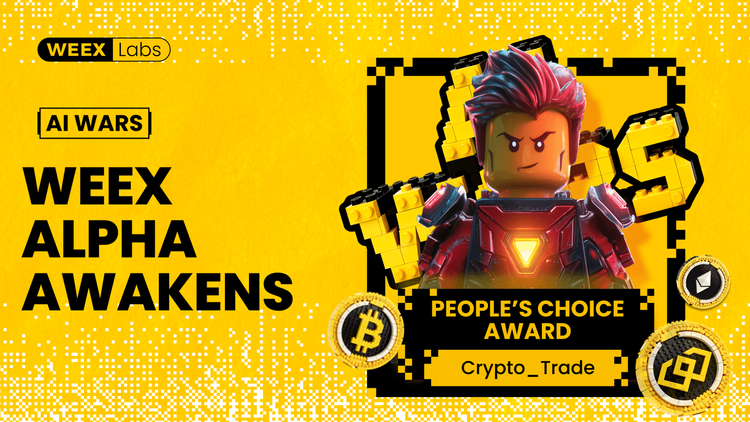
How a Structured AI Crypto Trading Bot Won at the WEEX Hackathon
Crypto_Trade shows how structured inputs and controlled adaptability can build a more stable and reliable AI crypto trading bot within the WEEX AI Trading Hackathon, highlighting a practical path toward scalable AI trading systems.
Particle Founder: The entrepreneurial insights I have gained the most from in the past year
Stop lean startup, stop lightning entrepreneurship, and think carefully about what your product aspirations are.
Huang Renxun's latest podcast transcript: The future of Nvidia, the development of embodied intelligence and agents, the explosion of inference demand, and the public relations crisis of artificial intelligence
The competition in the future is not just about whose model is larger or whose computing power is stronger, but also about who understands the industry better, who can embed AI more deeply into real processes, and who can organize these capabilities into a runnable and scalable system.
OKX Ventures Research Report: AI Agent Economic Infrastructure Research Report (Part 1)
The existing infrastructure is hostile to the Agent economy. Agents can think and act independently at the "capability level," but at the "economic level," they are still locked into infrastructure designed for humans.
The migration of settlement rights: B18 and the institutional starting point of on-chain banks
In the traditional system, banks decide the settlement; in the on-chain system, code begins to take over this responsibility.
From Tencent and Circle: Looking at the Simple and Difficult Questions of Investment
The AI narrative continues to ferment, but the recent performance of related stocks varies, with some in the midst of summer and others as if in winter.
The second half of stablecoins no longer belongs to the crypto circle
What Coinbase doesn't want, Mastercard is eager to buy.


 App
App