
The Hidden Truth of Trade to Earn: Without Capital, Rewards Are Just Delayed Fees


Main takeaways:
- Trading fees have long been a built-in cost structure for users — Trade to Earn introduces a model that redirects part of this value back to participants.
- WEEX’s $2,000,000 WXT buyback adds real capital support to its Trade to Earn campaign, strengthening reward credibility and value protection.
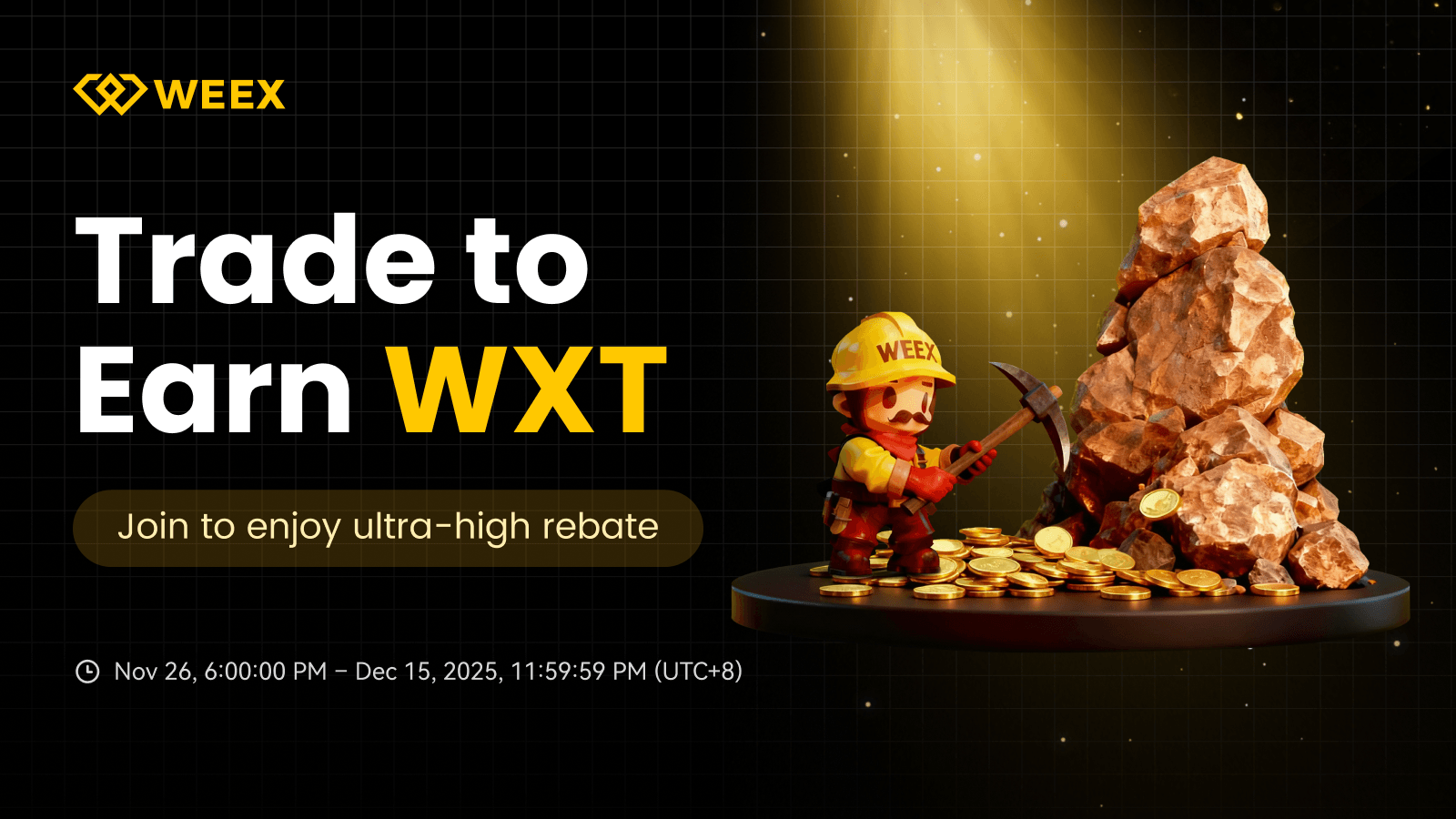
Trading Fees: The Overlooked Guaranteed Loss
For most traders, P&L is uncertain, and market direction is unpredictable. But one thing is guaranteed: trading fees. No matter whether a trade wins or loses, fees are incurred and permanently transferred to the exchange. Over time, this creates a deeply asymmetric structure: users assume risk, while platforms collect certainty. This “silent cost” has long been accepted as unavoidable. Trade more, pay more. Participate more, lose more to fees.
Trade to Earn challenges this fundamental assumption.
Trade to Earn: Turning Participation into True Equity
At its core, Trade to Earn redefines the relationship between traders and platforms. Instead of treating fees as a one-way extraction, Trade to Earn reallocates a portion of that value back to users—not as a simple rebate, but as participation-based platform equity. Trading activity is no longer just a cost center. It becomes a source of accumulated value.
This is the fundamental breakthrough: users are no longer only customers, but stakeholders. However, this model only works if the value distributed is real and sustainable.
The Sustainability Problem: When Rewards Dilute Value
Most Trade to Earn models rely primarily on platform token rewards. While this initially feels attractive, it introduces a structural risk:
- Rewards increase circulating supply
- Supply often outpaces organic demand
- Token value declines over time
When incentives dilute faster than value is created, Trade to Earn turns into delayed fee refunds, not long-term equity. This is not a failure of Trade to Earn itself, but a failure of capital commitment. Without intervention, inflation erodes trust. And once rewards lose credibility, participation inevitably fades.
Buybacks: Not a Marketing Tool, but a Capital Statement
This is where buybacks matter. A buyback is not a price-support slogan; it is a capital statement that the platform is willing to use its own capital to absorb supply and restore balance. In incentive design terms, buybacks do one critical thing: They transfer part of the economic burden from users back to the platform itself.
That shift changes everything. Trade to Earn supported by buybacks stops being an emission-driven incentive and starts resembling a long-term equity mechanism.
The WEEX Case: When Trade to Earn is Backed by Capital
WEEX’s recently announced $2,000,000 WXT buyback plan is a clear example of this approach.
Rather than relying solely on token rewards to incentivize trading, WEEX commits platform capital to actively reduce circulating supply. This creates a value closed loop:
- Trading Activity Generates Rewards
- Rewards Increase Circulation
- Buybacks Counterbalance Inflation
- Value Preservation Reinforces Participation
In this structure, WXT is not just an incentive token — it becomes a value-bearing asset tied to platform performance and capital decisions. While the Trade to Earn campaign itself may be time-limited, the introduction of buyback demonstrates a shift toward more sustainable incentive economics beyond short-term promotions.
If you'd like to see how this model works in practice, you may explore the ongoing WEEX Trade to Earn event here.
A Smarter Question for Traders
For traders evaluating Trade to Earn programs, the key question is no longer: “How much can I earn?” but rather: “Who is ultimately paying for these rewards?”
If the entire cost is passed back to token holders, sustainability is an illusion. If the platform shares the cost through capital commitment, incentives become credible. Trade to Earn reaches its full potential not when rewards are high, but when value is protected. And that difference is what separates incentives that attract attention from models that earn trust. If you are interested in the event, please click here and start your Trade to Earn journey.
About WEEX
Founded in 2018, WEEX has developed into a global crypto exchange with over 6.2 million users across more than 130 countries. The platform emphasizes security, liquidity, and usability, providing over 1,200 trading pairs and offering up to 400x leverage in crypto futures trading. In addition to traditional spot and derivatives markets, WEEX is expanding rapidly in the AI era — delivering real-time AI news, empowering users with AI trading tools, and exploring innovative trade-to-earn models that make intelligent trading more accessible to everyone. Its 1,000 BTC Protection Fund further strengthens asset safety and transparency, while features such as copy trading and advanced trading tools allow users to follow professional traders and experience a more efficient, intelligent trading journey.
Risk Reminder
Futures trading involves risk. Please manage leverage and position sizes carefully.
All rewards are subject to the official event rules and will be distributed after the event ends.
You may also like

WEEX Labs Co-Hosts ETHMilan 26 Openguin Party: Rooftop AI Trading Calling

RCD Espanyol vs Real Madrid: Can the Pericos Delay the Inevitable?
RCD Espanyol vs Real Madrid lineups, standings, and stats for May 3, 2026. Real Madrid visits RCDE Stadium as Barcelona closes in on the LALIGA title. Full preview inside.

Espanyol vs FC Barcelona: A Derby Fought with Fire and Quality
The Espanyol vs FC Barcelona derby delivered high-intensity football as Barca won 4-1, moving nine points clear at the top of LALIGA. Lamine Yamal's masterclass, Ferran Torres' brace, and a passionate city rivalry on full display. WEEX, Official Regional Partner of LALIGA in Hong Kong and Taiwan celebrates the beautiful game.

Atlético Madrid vs FC Barcelona: 90 Minutes to Destroy a Dream or Write History
Atlético Madrid vs FC Barcelona Champions League second leg is do-or-die. Full Atlético Madrid vs FC Barcelona lineups, stats, timeline — plus who chokes and who conquers.
WEEX Poker Party Season 2: Check How to Earn Crypto Rewards Now!
Learn how WEEX Poker Party Season 2 (Joker Card Event) works. Discover rules, scoring, rewards, and strategies to earn crypto rewards through gamified trading.

What Recent Bitcoin Moves and Rising Gold Prices Signal for Traders — Insights From NBX Warsaw 2026
Bitcoin price movements, rising gold demand, and changing trader behavior were key discussion topics at NBX Warsaw 2026. Here’s what these signals may reveal about market structure shifts and trading strategy trends in 2026.
WEEX Poker Party: The First-Ever Crypto Trading Card Game—Trade, Play, and Win Real Rewards
Join WEEX Poker Party, the first interactive crypto trading card game. Trade to earn cards, trigger lucky buffs, build winning poker hands, and claim daily rewards from April 1–30, 2026. Start playing now!
WEEX Trade to Earn: Turn Futures Trading into Instant WXT Rewards
Join WEEX Trade to Earn and earn instant WXT rebates on every futures trade. Boost rewards with referrals and tasks. Trade more, earn more on WEEX exchange.
WEEX Trade to Earn: Trade More, Earn More with Instant WXT Rebates
Join WEEX Trade to Earn event from March 9–31, 2026. Earn instant WXT rebates on every trade, invite friends for bonuses, and climb the leaderboard. Register now!

WEEX x LALIGA: The Partnership Bringing Crypto and Spanish Football Together
WEEX becomes official crypto exchange partner of LALIGA in Hong Kong and Taiwan. Discover how football and trading share values of discipline, strategy, and excellence.
WEEX x LALIGA Partnership: Where Crypto Trading Meets Elite Football
Discover the WEEX LALIGA partnership—where crypto exchange meets elite football. Follow LALIGA matches, updates, and trading insights for the 2025-26 season.

WEEX P2P merchant referral program | Invite and earn up to 100 USDT each!
WEEX P2P is launching the "Merchant Referral Program" to build a stronger P2P merchant community and boost market liquidity. Refer potential merchants to join WEEX P2P and both of you can earn rewards.
WEEX LALIGA Partnership 2026: Where Football Excellence Meets Crypto Innovation
WEEX becomes official crypto exchange partner of LALIGA in Hong Kong and Taiwan. Discover how this partnership brings together football excellence and trading discipline.
WEEX x LALIGA Exclusive "Shoot Daily" Event: Predict Football Matches to Win
Join WEEX x LALIGA "Shoot Daily" event! Predict football matches, win BTC & exclusive co-branded jerseys. Trade, refer & earn spins. Feb 9–28. Play now!
WEEX at CCCC Lisbon 2025: Powering Crypto Content Creators and Igniting the AI Trading Era with Upcoming Hackathon
WEEX’s participation in CCCC Lisbon 2025, along with its upcoming AI Wars: WEEX Alpha Awakens hackathon, will mark a key step in its strategic expansion across Europe and beyond.

WEEX at Blockchain Life 2025: Connecting Communities and Driving Innovation in Dubai
WEEX’s participation in Blockchain Life 2025 was a significant milestone in our journey to become a global leader in the crypto space. As we continue to expand our reach, we remain committed to building deeper liquidity and bigger opportunities for traders, influencers, and the entire blockchain community.

WEEXPERIENCE Whales Night: AI Trading, Crypto Community & Crypto Market Insights
On December 12, 2025, WEEX hosted WEEXPERIENCE Whales Night, an offline community gathering designed to bring together local cryptocurrency community members. The event combined content sharing, interactive games, and project presentations to create a relaxed yet engaging offline experience.

WEEX’s CCCC Lisbon 2025 Recap: Global Presence and the Road Toward AI-Driven Crypto Trading
WEEX proudly concluded its journey at Crypto Content Creator Campus (CCCC) 2025 as a Platinum Sponsor, marking a significant presence at one of the world’s premier gatherings for crypto creators, innovators, and industry leaders
WEEX Labs Co-Hosts ETHMilan 26 Openguin Party: Rooftop AI Trading Calling
RCD Espanyol vs Real Madrid: Can the Pericos Delay the Inevitable?
RCD Espanyol vs Real Madrid lineups, standings, and stats for May 3, 2026. Real Madrid visits RCDE Stadium as Barcelona closes in on the LALIGA title. Full preview inside.
Espanyol vs FC Barcelona: A Derby Fought with Fire and Quality
The Espanyol vs FC Barcelona derby delivered high-intensity football as Barca won 4-1, moving nine points clear at the top of LALIGA. Lamine Yamal's masterclass, Ferran Torres' brace, and a passionate city rivalry on full display. WEEX, Official Regional Partner of LALIGA in Hong Kong and Taiwan celebrates the beautiful game.
Atlético Madrid vs FC Barcelona: 90 Minutes to Destroy a Dream or Write History
Atlético Madrid vs FC Barcelona Champions League second leg is do-or-die. Full Atlético Madrid vs FC Barcelona lineups, stats, timeline — plus who chokes and who conquers.
WEEX Poker Party Season 2: Check How to Earn Crypto Rewards Now!
Learn how WEEX Poker Party Season 2 (Joker Card Event) works. Discover rules, scoring, rewards, and strategies to earn crypto rewards through gamified trading.
What Recent Bitcoin Moves and Rising Gold Prices Signal for Traders — Insights From NBX Warsaw 2026
Bitcoin price movements, rising gold demand, and changing trader behavior were key discussion topics at NBX Warsaw 2026. Here’s what these signals may reveal about market structure shifts and trading strategy trends in 2026.

Contents
Popular coins
Latest Crypto News