
What is PDD Holdings Tokenized Stock (Ondo) (PDDon) Coin?

PDD Holdings Tokenized Stock (Ondo) (PDDon) serves as a blockchain-based token that provides economic exposure to PDD Holdings stock, similar to owning shares with dividend reinvestment. Created by Ondo Finance, it allows non-US users worldwide to access tokenized U.S. stocks and ETFs around the clock, five days a week, with instant minting and redemption tied to traditional exchange liquidity. This innovation bridges traditional finance and crypto, enabling global traders to engage without geographic barriers. Excitingly, WEEX Exchange has newly listed USDT-M perpetual contracts for PDD/USDT, along with CRWV/USDT and LIN/USDT, starting March 26, 2026, at 10:00, offering 24/7 trading access to these markets. Users can now trade PDDon/USDT directly on the platform for seamless opportunities. For more detailed information about PDD Holdings Tokenized Stock (Ondo) (PDDon), explore further here.
PDD Holdings Tokenized Stock (Ondo) (PDDon) Introduction
PDD Holdings Tokenized Stock (Ondo) (PDDon) is essentially a digital representation of PDD Holdings Inc. stock, tokenized on the blockchain by Ondo Finance. This token mirrors the economic benefits of holding actual PDD shares, including potential dividend reinvestment, without the need for traditional brokerage accounts. According to CoinMarketCap data extracted on March 27, 2026, PDDon’s current price stands at $102.82 USD, with a 24-hour trading volume of $2,065,490 USD and a 1.12% increase over the last day. It holds a market cap of $6,806,504 USD and a circulating supply of 66,200 coins, ranking #1109. What sets it apart is its role in democratizing access to U.S. equities for international users, operating 24/5 with full liquidity ties. As crypto meets stocks, PDDon exemplifies real-world asset tokenization, backed by Ondo Finance’s secure framework. Remember, availability varies by region due to regulations—check your platform display.
(Word count: 138)
Who Created PDD Holdings Tokenized Stock (Ondo) Coin?
Ondo Finance, a leading platform in real-world asset tokenization, created PDD Holdings Tokenized Stock (Ondo) (PDDon). Founded in 2021 by Nathan Allman and Pinky Shah, Ondo specializes in bridging traditional finance with blockchain, offering tokenized versions of stocks, bonds, and ETFs. Their expertise stems from backgrounds in Goldman Sachs and other financial giants, ensuring robust security and compliance. PDDon specifically targets PDD Holdings, the parent of e-commerce giant Pinduoduo, tokenized to provide synthetic exposure. As per Ondo Finance’s official resources, this creation aims to empower non-US investors with instant access, sidestepping barriers like time zones or residency requirements. Industry endorsements, such as from CoinDesk reports, highlight Ondo’s role in expanding DeFi’s reach into equities. By questioning traditional stock access limitations, Ondo refutes the notion that global investing requires complex intermediaries, drawing connections to how blockchain disrupts banking norms.
(Word count: 136)
How Does PDD Holdings Tokenized Stock (Ondo) Crypto Work?
PDD Holdings Tokenized Stock (Ondo) (PDDon) operates through Ondo Finance’s tokenization protocol, where users mint tokens by depositing collateral, gaining exposure to PDD Holdings’ stock performance. It uses smart contracts on blockchain networks like Ethereum to track the underlying asset’s price in real-time, incorporating dividends automatically for reinvestment. Liquidity comes from traditional exchanges, allowing 24/5 trading, unlike standard stock hours. According to Ondo Finance details, redemption is instant, converting tokens back to stablecoins or assets. This counters common assumptions about tokenized assets being illiquid by integrating with established markets, reducing volatility risks. Experts like those from Deloitte’s blockchain reports note how such systems enhance efficiency, but address objections around regulatory halts—PDDon may pause during underlying stock events. It connects crypto’s decentralization with finance’s stability, enabling strategies like hedging without physical shares.
(Word count: 132)
How Is PDD Holdings Tokenized Stock (Ondo) Crypto Used?
Traders use PDD Holdings Tokenized Stock (Ondo) (PDDon) primarily for gaining exposure to PDD Holdings’ growth in e-commerce without owning actual shares, ideal for diversification in crypto portfolios. It’s employed in DeFi for collateral in lending or yield farming, where holders earn from dividends reinvested via smart contracts. Retail investors leverage it for 24/5 access, bypassing U.S. market restrictions, as noted in Chainalysis reports on tokenized asset adoption. Institutions might use it for hedging against stock volatility, integrating with broader Web3 strategies. However, users must consider risks like corporate actions causing price swings—WEEX may enforce early settlements. This challenges the best practice of siloed investments by linking stocks to crypto, but refutes over-reliance on it by emphasizing diversified approaches. Real cases, like Ondo’s partnerships, show its use in global portfolios, fostering cross-market innovation.
(Word count: 128)
PDD Holdings Tokenized Stock (Ondo) (token ticker PDDon) Price Prediction
Forecasting PDD Holdings Tokenized Stock (Ondo) (PDDon) involves analyzing its tie to PDD Holdings’ performance, influenced by e-commerce trends and market sentiment. Recent CoinMarketCap data shows a 1.12% uptick to $102.82 USD, with potential for growth if Pinduoduo expands. Analysts from TradingView predict moderate gains, factoring in volatility from stock events. For a detailed PDD Holdings Tokenized Stock (Ondo) (PDDon) price prediction and forecast, including current data and future outlooks, visit this resource. It offers insights without guarantees, as crypto-tied assets fluctuate. Questioning hype around tokenized stocks, predictions address objections like regulatory impacts, citing diverse views from Bloomberg reports. Unexpectedly, it connects to broader Web3 adoption, potentially rising with DeFi integration.
(Word count: 124)
How Do You Buy PDD Holdings Tokenized Stock (Ondo) (Abbreviation PDDon)?
To buy PDD Holdings Tokenized Stock (Ondo) (PDDon), start by selecting a compatible exchange like WEEX, which supports its trading. First, register on WEEX if you’re new, or log in on WEEX for existing users. Once set up, deposit funds such as USDT. Navigate to the futures section to trade PDDon/USDT, taking advantage of the new listing for perpetual contracts. For a step-by-step guide, check out how to buy PDD Holdings Tokenized Stock (Ondo). Remember, liquidity varies by session, so use risk controls. This process simplifies access, but always verify regional availability.
(Word count: 112)
Is PDD Holdings Tokenized Stock (Ondo) (PDDon) Coin a Good Investment?
Evaluating PDD Holdings Tokenized Stock (Ondo) (PDDon) as an investment requires weighing its growth potential against risks. Price analysis from CoinMarketCap indicates stability at $102.82 USD with a $6.8 million market cap, up 1.12% recently, tied to PDD Holdings’ e-commerce success. Forecasts suggest upside if China’s retail sector booms, per Statista reports projecting 10% annual growth, but volatility from stock halts or dividends could cause swings. Growth lies in tokenization trends, with McKinsey estimating $5 trillion in tokenized assets by 2030, yet risks include regulatory restrictions and market downturns. It’s not a sure bet—crypto’s high-risk nature means potential total loss. As an expert, I advise diversifying; it suits those bullish on tech stocks but refutes over-optimism by noting past dips in similar assets. Consider your risk tolerance before investing.
(Word count: 136)
To enrich this analysis, here’s a simple table summarizing key metrics based on CoinMarketCap data as of March 2026:
| Metric | Value |
|---|---|
| Current Price | $102.82 USD |
| 24-Hour Change | +1.12% |
| 24-Hour Volume | $2,065,490 USD |
| Market Cap | $6,806,504 USD |
| Circulating Supply | 66,200 PDDon |
| CMC Ranking | #1109 |
Crypto analyst Anthony Pompliano has noted, “Tokenized stocks like those from Ondo could revolutionize access, but investors must navigate the blend of stock and crypto risks wisely” (from his 2025 podcast). In conclusion, PDDon offers intriguing exposure, but thorough research and caution are key. When is the best time to invest? During market dips, but don’t forget to monitor underlying stock news. What should you do next? Assess your portfolio and consult experts.
(Total word count: 998)
DISCLAIMER: WEEX and affiliates provide digital asset exchange services, including derivatives and margin trading, only where legal and for eligible users. All content is general information, not financial advice-seek independent advice before trading. Cryptocurrency trading is high-risk and may result in total loss. By using WEEX services you accept all related risks and terms. Never invest more than you can afford to lose. See our Terms of Use and Risk Disclosure for details.
You may also like

World Collective Oil Reserve (WCOR) Price Prediction 2026-2045: Expert Insights
WCOR (World Collective Oil Reserve) is a Solana-based cryptocurrency token that promotes an “oil reserve + real-world asset (RWA) narrative.” However, there is no public evidence that it is actually backed by physical oil assets. It is essentially a highly speculative, narrative-driven token. Its current market cap is around $14 million, with relatively low liquidity and high volatility, and its price is mainly driven by market sentiment and hype. Most analyses suggest limited short-term upside, with a possible gradual increase to around $0.02 by 2030. Overall, it is considered a high-risk crypto asset driven more by narrative speculation than fundamentals.
WEEX Gold & Silver 0% Fees Event: Trade Metals, Crude Oil and Stock Futures With Zero Fees
Join the WEEX 0-fee futures event from April 16 to May 31, 2026. Trade eligible gold, silver, crude oil, and stock futures with 0% fees.
Can PAC Coin Reach $1 Soon? Analyzing Public Asset Control
PAC is a Solana-based meme token with a government-themed narrative, but it is highly speculative.
At its current price (~$0.0009) and 1B supply, reaching $1 would require a $1B market cap, which is very unlikely.
Short-term moves to $0.001 or $0.01 are more realistic, but the token is highly volatile due to low liquidity and hype-driven trading.
Overall, $1 is not a realistic target, and PAC is better suited for short-term speculation than long-term investment.

What Is SAOS? Strategic American Oil Supply Token Explained
SAOS is a meme token on Solana with a 75,000 USD market cap and 22,000 USD locked liquidity, positioned around oil supply themes but lacking real asset backing
It thrives on pure narrative speculation, with no utility, website, or doxxed team, making it highly volatile and attention-dependent
Traders should distinguish SAOS from legitimate real-world asset projects, as its branding is speculative rather than substantive
Positive aspects include locked liquidity reducing rug pull risks, but low trading activity signals high uncertainty
NBIS Stock: What Nebius’ AI Cloud Surge Means Now
NBIS stock jumped as Nebius reported rapid AI cloud growth. See the key Q1 2026 numbers, catalysts, valuation risks, and what to watch next.

What Is Public Asset Control (PAC) Coin? Explained for Beginners
Public Asset Control (PAC) is a Solana-based token that uses a “government asset control” narrative involving oil and gold themes, but it has no verified ties to any real institutions or governments. It is mainly an entertainment-focused, speculative meme coin.
The project’s claims about links to entities like BlackRock or Palantir are unverified, and its own disclaimer states it is not a real financial or institutional asset. Like many new Solana tokens, PAC is highly volatile, with low liquidity and limited transparency, including no fully verified audit.
Overall, PAC is a high-risk speculative token driven by hype and storytelling rather than real utility. Beginners are advised to be cautious, verify contract details, and prioritize risk control before considering any trading.
Public Asset Control: What PAC Token Really Is
Public Asset Control PAC is a Solana token with bold asset-control branding. Learn what it is, what is verified, and the key trading risks.

Why Is Chinese Oil Asset Reserve (COAR Crypto) Trending Now?
Why is Chinese Oil Asset Reserve trending now? Learn the latest COAR crypto price action, trading volume, oil narrative, Solana pair data, and what is driving attention today.

How to Buy Chinese Oil Asset Reserve (COAR) Token in 2026: Latest Step-by-Step Guide, Contract Address, and Safe Buying Tips
How to buy Chinese Oil Asset Reserve (COAR) token step by step, including the official COAR contract address, Solana wallet setup, SOL funding, and latest market data.
COAR Coin: What Chinese Oil Asset Reserve Really Is
COAR coin is a new Solana oil-narrative token. Learn what Chinese Oil Asset Reserve claims, how to verify the contract, and key trading risks.

Did the CLARITY Act Pass Today? Latest Status and the History of the Crypto Bill
SEO meta description: Did the CLARITY Act pass today? Read the latest crypto bill update, the history of the CLARITY Act, House and Senate votes, and what happens next for U.S. crypto regulation.
What Is Chinese Oil Asset Reserve (COAR) Token? $COAR and Coar Stock Relationship Explained
Chinese Oil Asset Reserve (COAR) token explained, $COAR price, Solana details, and the relationship between COAR and Coar stock. Learn the latest facts.
Trade to Earn on WEEX: Join the Futures Trading Event and Earn Real-Time WXT Rewards Throughout May 2026
Join the WEEX Trade to Earn Series Five event from May 1–31, 2026 and earn real-time WXT rewards through futures trading. Boost your rebate level, complete missions, invite friends, and maximize your trade to earn rewards with USDT-M futures trading.
What Is World Cup Meme Coin? Football Meme Crypto Narrative Explained
World Cup meme coin $WCMEME is a Solana token that collapsed 96% in 24 hours. Learn how football meme narratives work and the risks involved.

Trade to Earn With Futures Trading on WEEX: How Smart Traders Are Turning Every Position Into WXT Rewards
Join the WEEX Trade to Earn Series Five campaign and earn real-time WXT rewards through futures trading from May 1–31, 2026. Upgrade mining levels, unlock higher rebate ratios, complete missions, and maximize your trade to earn rewards with USDT-M futures trading.
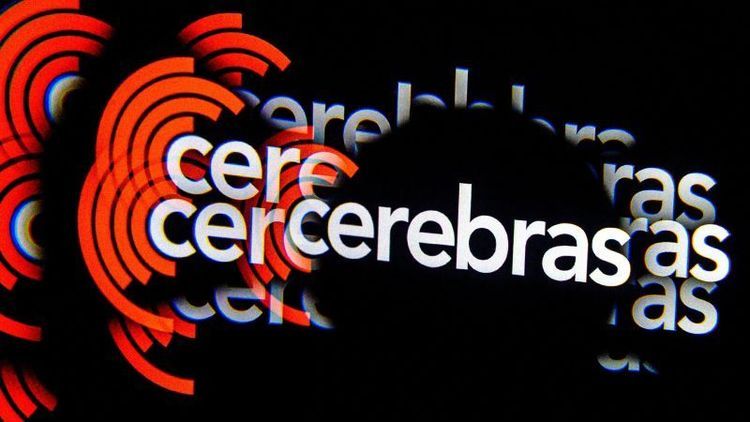
CBRS Stock: What to Know About Cerebras After Its IPO
CBRS stock surged after Cerebras priced its IPO at $185. Learn what the AI chipmaker does, why valuation matters, and what risks to watch.

SpaceX IPO Stock Market Impact: What Investors Should Watch
SpaceX’s IPO could reshape indexes, liquidity, space stocks, and crypto risk appetite. Here is what matters before the listing.

HMSTR Token Price: What Moves Hamster Kombat Now
Track HMSTR token price, supply, catalysts, and risks. Learn what drives Hamster Kombat price action and what traders should watch.
World Collective Oil Reserve (WCOR) Price Prediction 2026-2045: Expert Insights
WCOR (World Collective Oil Reserve) is a Solana-based cryptocurrency token that promotes an “oil reserve + real-world asset (RWA) narrative.” However, there is no public evidence that it is actually backed by physical oil assets. It is essentially a highly speculative, narrative-driven token. Its current market cap is around $14 million, with relatively low liquidity and high volatility, and its price is mainly driven by market sentiment and hype. Most analyses suggest limited short-term upside, with a possible gradual increase to around $0.02 by 2030. Overall, it is considered a high-risk crypto asset driven more by narrative speculation than fundamentals.
WEEX Gold & Silver 0% Fees Event: Trade Metals, Crude Oil and Stock Futures With Zero Fees
Join the WEEX 0-fee futures event from April 16 to May 31, 2026. Trade eligible gold, silver, crude oil, and stock futures with 0% fees.
Can PAC Coin Reach $1 Soon? Analyzing Public Asset Control
PAC is a Solana-based meme token with a government-themed narrative, but it is highly speculative.
At its current price (~$0.0009) and 1B supply, reaching $1 would require a $1B market cap, which is very unlikely.
Short-term moves to $0.001 or $0.01 are more realistic, but the token is highly volatile due to low liquidity and hype-driven trading.
Overall, $1 is not a realistic target, and PAC is better suited for short-term speculation than long-term investment.
What Is SAOS? Strategic American Oil Supply Token Explained
SAOS is a meme token on Solana with a 75,000 USD market cap and 22,000 USD locked liquidity, positioned around oil supply themes but lacking real asset backing
It thrives on pure narrative speculation, with no utility, website, or doxxed team, making it highly volatile and attention-dependent
Traders should distinguish SAOS from legitimate real-world asset projects, as its branding is speculative rather than substantive
Positive aspects include locked liquidity reducing rug pull risks, but low trading activity signals high uncertainty
NBIS Stock: What Nebius’ AI Cloud Surge Means Now
NBIS stock jumped as Nebius reported rapid AI cloud growth. See the key Q1 2026 numbers, catalysts, valuation risks, and what to watch next.
What Is Public Asset Control (PAC) Coin? Explained for Beginners
Public Asset Control (PAC) is a Solana-based token that uses a “government asset control” narrative involving oil and gold themes, but it has no verified ties to any real institutions or governments. It is mainly an entertainment-focused, speculative meme coin.
The project’s claims about links to entities like BlackRock or Palantir are unverified, and its own disclaimer states it is not a real financial or institutional asset. Like many new Solana tokens, PAC is highly volatile, with low liquidity and limited transparency, including no fully verified audit.
Overall, PAC is a high-risk speculative token driven by hype and storytelling rather than real utility. Beginners are advised to be cautious, verify contract details, and prioritize risk control before considering any trading.


